
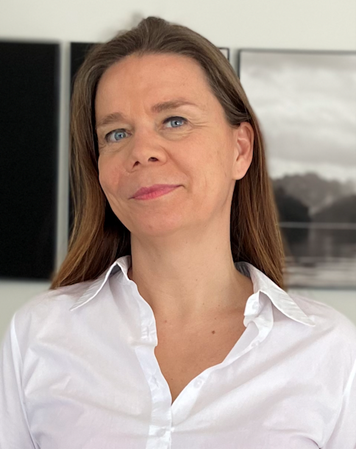
Veronique Hoste is Senior Full Professor of Computational Linguistics at the Faculty of Arts and Philosophy at Ghent University. She is department head of the Department of Translation, Interpreting and Communication and director of the LT3 language and translation team at the same department. She is also research director of the Faculty of Arts and Philosophy. Veronique has expertise in machine learning of natural language, and more specifically in computational approaches to the modeling of semantics and discourse, such as event detection, entity and event coreference resolution, irony detection, emotion analysis, etc. In 2023-2024, Veronique was appointed by the Université Libre de Bruxelles as their Francqui chair. She has recently been elected as new member of the Royal Flemish Academy of Belgium for Science and the Arts (KVAB).
Veronique has published papers related to different research projects and has different PhD students under her guidance. She currently (co-supervises) PhD students on topics such as the modeling of common-sense knowledge in automatic irony detection (Common-sense); the detection of emotion and generation of empathy in multimodal conversational agents (FlandersAI); the modeling of emotion trajectories in customer service dialogues (METRICS), etc. Veronique also seeks participation in interdisciplinary research projects, e.g. on content-based news recommendation (NewsDNA), on the detection of signs of suicidality in collaboration with the Suicide Prevention Centre, …
Veronique is also keen to communicate research results beyond the academic community, e.g. in the “AI at school” project (see: https://dwengo.org/chatbot/). The LT3 team has recently als published a book on NLP for a wide audience, entitled "Taaltechnologie ontrafeld", which is also the first book in Dutch on language technology. End 2024, Ellen De Geyndt (CEO), Veronique and Els Lefever co-founded the first LT3 spin-off AlfaSent, which helps companies in becoming more customer-centric by using AI to analyse customer feedback.
Domains of expertise
- Computational linguistics
- Natural language processing
- Machine learning
Selected projects & research platforms
Modelling empathy in multimodal conversational agents: The goal of this project is to design and build autonomous, intelligent, trustworthy entities that communicate and collaborate seamlessly with humans in natural and complex environments. This entails communication in ways that are natural for humans, such as natural language, but also the ability to provide multi-step human-like reasoning by perceiving and understanding the complex environment. This will allow to enhance society and workplace with artificial entities that can clearly understand the environment they are interacting with, feature the same level of adaptivity to unseen tasks as humans, while appropriately interpreting the social and physical environment, and involving, informing and supporting human colleagues.
Website: https://www.flandersairesearch.be/en; https://lt3.ugent.be/projects/modeling-empathy-in-multimodal-conversational-agen/
The AMiCA ("Automatic Monitoring for Cyberspace Applications") project aimed to mine relevant website resources (blogs, chat rooms and social networks), and collect, analyse, and integrate large amounts of subjective information using text and image analysis with the ultimate goal of tracing harmful content in an automatic way. Given the increasing impact of video and image in live streaming applications, a multimedia approach is needed, which aims at the reliable detection of potentially harmful images (e.g., porn, automutilation). Classifiers were built that able to spot harmful content “on-the-fly”. If critical situations were detected (e.g. a very violent communication), alerts can be issued, sent to the relevant users and visualized in an intelligent manner, depending on the user they are addressed to (customized to the user profile). This real time search is indispensable in life and privacy threatening situations. The alerts are needed at different levels: by policy makers and law enforcement to adopt informed decisions and re-direct (possible) victims to the online restorative and assistance services, by moderators of social network sites to ban unwanted content, by parents to be integrated in parental control software, and –most importantly- by the young users themselves.
Website: http://www.amicaproject.be/; https://lt3.ugent.be/projects/amica
Selected publications
- Vandenbussche, N., Van Hee, C., Hoste, V., & Paemeleire, K. (2022). Using natural language processing to automatically classify written self-reported narratives by patients with migraine or cluster headache. JOURNAL OF HEADACHE AND PAIN, 23(1). https://doi.org/10.1186/s10194-022-01490-0
- Jacobs, G., Van Hee, C., & Hoste, V. (2022). Automatic classification of participant roles in cyberbullying : can we detect victims, bullies, and bystanders in social media text? NATURAL LANGUAGE ENGINEERING, 28(2), 141–166. https://doi.org/10.1017/s135132492000056X
- Desmet, B., & Hoste, V. (2018). Online suicide prevention through optimised text classification. INFORMATION SCIENCES, 439, 61–78. https://doi.org/10.1016/j.ins.2018.02.014
Work details
- Veronique.Hoste@ugent.be
- Groot-Brittanniëlaan 45, 9000 Ghent, Belgium
- www.linkedin.com/in/veronique-hoste-5b5b93
- https://research.ugent.be/web/person/veronique-hoste-0/en
- ORCID number: 0000-0002-0539-4630